Top 10 Influential Figures in Pop Culture Today
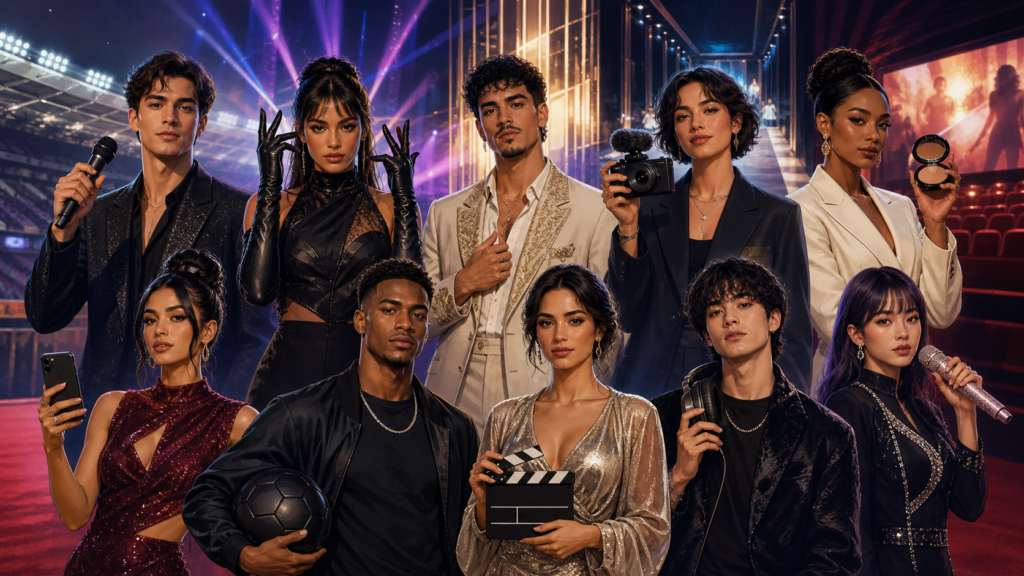
Pop culture is no longer shaped only by movie studios, television networks and record labels. Streaming platforms, social media, fashion partnerships and creator-led businesses have given public figures more direct influence over what audiences watch, wear, buy and discuss.
The following list highlights 10 people whose work continues to affect global entertainment and consumer culture in 2026. It is an editorial selection based on reach, cultural relevance, trend-setting power and industry impact—not simply follower totals or financial success.
Defining Pop Culture
Popular culture includes the entertainment, ideas, personalities, products and trends widely recognized by the public at a particular time. Music, film, television, fashion, sport, social media, gaming and celebrity-led businesses all contribute to it.
Pop culture matters because it reflects society while also influencing it. A popular album can renew interest in a neglected musical tradition. A film star’s red-carpet outfit can create a worldwide fashion trend. A digital creator can introduce a new entertainment format that major studios later attempt to reproduce.
The growth of global streaming and social platforms has also made pop culture more international. English-language entertainment remains powerful, but artists from Latin America, Asia and other regions can now influence audiences without completely adapting their work for the American market.
Criteria for Influence
The figures included here were evaluated using several factors:
- Audience reach: The ability to attract a large, international audience.
- Trend-setting power: Influence over music, fashion, language, beauty, entertainment or online behavior.
- Cross-platform presence: Success in more than one area of popular culture.
- Industry impact: The ability to change how entertainment or consumer products are created, marketed and distributed.
- Cultural relevance: Continued participation in important public conversations.
- Staying power: Evidence that the person’s influence extends beyond one viral moment.
- Representation: The ability to expand opportunities or visibility for communities historically overlooked by mainstream entertainment.
Top 10 Influential Figures Today
1. Taylor Swift
Taylor Swift’s influence extends far beyond the commercial performance of her albums. She has transformed concerts into citywide cultural events, encouraged public discussion about ownership in the music industry and demonstrated the organizational power of a highly engaged fan community.
The Eras Tour became a defining event of the 2020s. Fans created themed clothing, exchanged handmade friendship bracelets and traveled between cities to attend performances. Public agencies also studied the tour’s economic impact: London officials estimated that its local dates could generate approximately £300 million for the city’s economy.
Swift’s “Taylor’s Version” rerecording project also turned a dispute about master recordings into a mainstream conversation about artists’ rights. Her most important cultural achievement may be her ability to make the business behind music interesting to the general public.
Key areas of influence: Music ownership, touring, fan culture, fashion and the entertainment economy.
2. Beyoncé
Beyoncé remains one of popular culture’s most important performers because each major project operates as more than a collection of songs.
Her albums have explored Black history, feminism, dance music, Southern identity and the complicated ownership of American musical traditions. Cowboy Carter brought Black country musicians and the genre’s African American history into a much larger public conversation.
The album won Album of the Year at the 2025 Grammys. Beyoncé also became the first Black woman to win Best Country Album.
Her influence can also be seen in concert staging, visual albums and the increased expectation that major pop releases should have a clear creative concept. Beyoncé does not simply respond to trends; she frequently reframes the cultural history behind them.
Key areas of influence: Music, live performance, visual storytelling, fashion and Black cultural representation.
3. Bad Bunny
Bad Bunny has helped make Spanish-language music central to global pop rather than treating it as a separate regional market.
The Puerto Rican artist was Spotify’s most-streamed global performer in 2025, receiving approximately 19.8 billion streams. His album Debí Tirar Más Fotos was also the platform’s most-streamed album of the year.
In 2026, the project became the first Spanish-language release to win the Grammy for Album of the Year.
Bad Bunny’s success is culturally important because it demonstrates that artists can achieve worldwide prominence while retaining their language and regional identity. His music, fashion campaigns, acting work and public celebration of Puerto Rican culture have made him a symbol of Latin music’s expanding influence.
Key areas of influence: Latin music, language, Puerto Rican identity, fashion and global streaming.
4. MrBeast
Jimmy Donaldson, better known as MrBeast, has played a major role in turning YouTube creators into competitors to traditional television studios.
His elaborate challenges, large cash prizes and philanthropy-based videos established a format that has been imitated by creators worldwide. The videos are often produced at a scale once associated primarily with network television and reality competitions.
In 2026, MrBeast became the first individual creator to reach 500 million YouTube subscribers. YouTube noted that he had already become the platform’s most-subscribed channel in 2024.
His influence is also visible in food brands, dubbed international channels, streaming projects and creator-led businesses. MrBeast has shown that an online personality can build a global entertainment operation without first becoming famous through Hollywood.
Key areas of influence: YouTube, reality entertainment, creator businesses, philanthropy and digital media production.
5. Rihanna
Rihanna has not needed a constant stream of new albums to remain influential. Her cultural power now spans music, beauty, lingerie, fashion and business.
Fenty Beauty’s emphasis on products for a broad range of skin tones helped push inclusivity from a marketing claim into a competitive requirement. LVMH says Rihanna created the company so women who had traditionally struggled to find suitable shades would be included.
The wider industry responded by expanding foundation ranges and paying greater attention to consumers with deeper skin tones. The phrase “Fenty effect” came to describe the pressure the brand placed on established beauty companies.
Rihanna’s example also changed expectations for celebrity businesses. Fenty demonstrated that a famous name could support a serious global company when combined with product quality, a clear market need and consistent creative direction.
Key areas of influence: Beauty inclusivity, fashion, music and celebrity entrepreneurship.
6. Kim Kardashian
Kim Kardashian helped create the modern model of turning personal visibility into a connected media and consumer-products business.
Reality television introduced her to the public, but social media allowed her to communicate with audiences without relying entirely on television producers or magazines. Her career influenced countless creators who now treat their lifestyle, relationships and personal image as an ongoing media franchise.
SKIMS expanded her reach into shapewear, underwear, loungewear and sportswear. The company’s collaboration with Nike produced NikeSKIMS, a brand intended to combine performance products with SKIMS’ body-focused approach to design.
Kardashian remains influential because she repeatedly translates attention into products, partnerships and new media formats. The larger creator economy continues to follow a path she helped popularize.
Key areas of influence: Reality television, social media, beauty standards, fashion and personal branding.
7. Cristiano Ronaldo
Cristiano Ronaldo’s influence demonstrates how thoroughly sport has become integrated with global entertainment and celebrity culture.
His football career provides the foundation of his fame, but his reach extends into fashion, fitness, advertising and digital media. Ronaldo became the most-followed individual on Instagram and quickly broke records after launching his YouTube channel.
Guinness World Records reported that his channel became the fastest to reach 10 million subscribers, achieving the mark in less than 12 hours. His combined following across major platforms was already approaching one billion accounts in 2024.
Ronaldo represents a generation of athletes who operate as their own international media companies. A post, celebration or style choice can become a global story independently of what happens during a match.
Key areas of influence: Sport, fitness, fashion, advertising and international social media.
8. Zendaya
Zendaya has developed a rare combination of credibility in television, blockbuster film and high fashion.
Her performance as Rue in Euphoria earned two Emmy Awards for Outstanding Lead Actress in a Drama Series. Her roles in the Spider-Man and Dune franchises established her blockbuster presence, while Challengers demonstrated her ability to lead and produce an adult-focused original film.
An exit survey reported by the Associated Press found that 55% of the opening audience for Challengers identified Zendaya as a primary reason for attending.
Her influence is equally visible in fashion. Working with stylist Law Roach, Zendaya turns promotional tours into themed fashion narratives connected to her films. The Council of Fashion Designers of America made her its youngest Fashion Icon recipient in 2021.
Key areas of influence: Film, television, red-carpet fashion and Gen Z celebrity culture.
9. Billie Eilish
Billie Eilish reshaped pop music by proving that quiet vocals, unconventional production and an anti-glamour image could connect with a massive audience.
Her early oversized clothing challenged the expectation that young female pop performers must build their careers around sexualized styling. As her image evolved, she continued using fashion as a way to control how the public interpreted her.
Eilish’s album Hit Me Hard and Soft produced “Birds of a Feather” and “Wildflower,” extending her influence beyond the visual style of her debut era. “Wildflower” won Song of the Year at the 2026 Grammy Awards.
She has also used major public appearances to discuss climate responsibility, body image and political issues. Her ability to combine vulnerability, experimentation and commercial success continues to influence younger singers and songwriters.
Key areas of influence: Alternative pop, youth fashion, body image and environmental advocacy.
10. Lisa of Blackpink
Lalisa Manobal, known professionally as Lisa, represents the increasingly global relationship between K-pop, luxury fashion and streaming entertainment.
As a member of Blackpink, Lisa helped bring Korean pop music to stadium audiences worldwide. Her solo career expanded with the album Alter Ego, while her role in The White Lotus Season 3 introduced her to a broader television audience.
Sony Music noted that 2025 included her solo album, acting debut and first independent Coachella performance.
Lisa’s influence is also significant because she is a Thai artist who became successful through the Korean entertainment system and then developed a worldwide personal brand. Her luxury fashion partnerships illustrate how K-pop stars now connect youth culture with established European fashion houses.
Key areas of influence: K-pop, Thai cultural visibility, luxury fashion, streaming television and global fandom.
How Influential Figures Are Changing the Industry
These 10 figures operate in different fields, but their influence reveals several changes affecting the entire entertainment industry.
Artists Have Greater Control
Taylor Swift’s rerecordings, Lisa’s independent management company and creator-owned media brands show that performers increasingly want control over intellectual property, distribution and audience relationships.
Traditional studios and labels remain important, but influential artists now arrive at negotiations with their own platforms and global communities.
Celebrity Brands Must Offer Real Products
Rihanna and Kim Kardashian helped move celebrity businesses beyond simple licensing deals. Consumers now expect famous founders to articulate a clear purpose, participate in product development and build companies capable of surviving beyond a temporary publicity cycle.
Language Is Becoming Less of a Barrier
Bad Bunny’s global streaming success shows that performers no longer need to record primarily in English to reach the center of international popular culture.
K-pop’s growth has produced a similar effect. Audiences are increasingly comfortable consuming entertainment that moves between languages and cultural traditions.
Fashion Has Become Part of Storytelling
Zendaya’s themed promotional wardrobes, Rihanna’s beauty campaigns and Lisa’s luxury partnerships demonstrate that clothing is no longer separate from entertainment marketing.
A premiere outfit can generate nearly as much online conversation as a trailer or song. Fashion houses benefit from fandom, while performers use clothing to expand the meaning of a project.
Creators Compete Directly With Studios
MrBeast’s production scale shows that social-media creators can compete with established television formats. Netflix, Amazon and other streaming companies increasingly collaborate with people who developed audiences independently through YouTube, TikTok and podcasts.
This shift gives audiences more influence because existing fan communities help determine which creators receive large production opportunities.
The Future of Pop-Culture Influence
The next generation of cultural leaders will probably move even more easily between industries.
A singer may simultaneously operate a fashion company, produce films and communicate directly with millions of followers. An athlete may run a media network. A creator may develop videos for social platforms while producing streaming series and physical products.
Artificial intelligence, virtual performers and increasingly personalized media will create new forms of fame. However, technology alone is unlikely to determine lasting influence. The most important figures will still be those who create a recognizable point of view and inspire audiences to participate.
Final Thoughts
The most influential figures in pop culture today do more than generate attention. They change the behavior of industries and audiences.
Taylor Swift has transformed touring and music ownership into public conversations. Beyoncé and Bad Bunny have challenged assumptions about genre and cultural identity. Rihanna and Kim Kardashian have changed celebrity entrepreneurship, while MrBeast has redefined the possible scale of creator-led entertainment.
Cristiano Ronaldo, Zendaya, Billie Eilish and Lisa demonstrate that modern influence is global, visual and rarely limited to one profession. Together, these figures show that contemporary pop culture is shaped wherever entertainment, identity, technology and commerce meet.